Panditarama Meditation Practices

PSMC Meditation Practices – A Simple Guide

We meditate not to impress others but to cultivate peace within ourselves and in the world. Join us as we follow the Buddha’s teachings and guidance from experienced teachers.

Choose Your Meditation Place and Posture

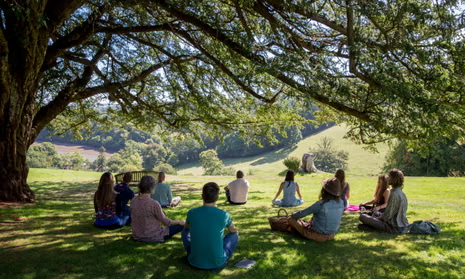
  • Find a quiet place for meditation, such as under a tree.
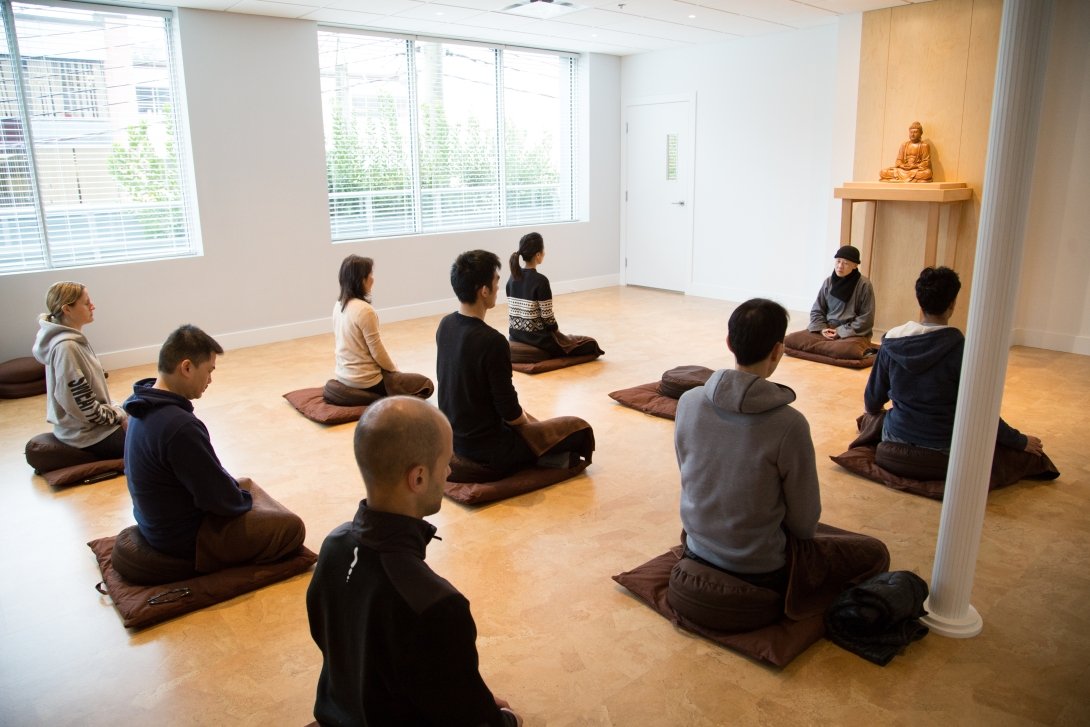
  • To achieve peace of mind, we must make sure our body is at peace. Sit comfortably with legs crossed. If needed, use another sitting position or even a chair. 
  • Sit upright, but not too stiff. Your back should be straight to avoid pain and to support steady concentration.

Observing the Breath

  • Close your eyes and bring your attention to your abdomen.
  • Breathe naturally—don’t force it. Notice how your abdomen rises as you inhale and falls as you exhale.
  • Be fully aware of each rising and falling, from beginning to end. Treat each breath as one complete, continuous process.

Helpful tip to stay focused: Gently note the movement in your mind.

  • “Rising, rising…”
  • “Falling, falling…”

Returning When the Mind Wanders

  • Your mind will drift; this is natural.
  • When it does, note it silently: “Thinking, thinking…” then gently return to the rising and falling of the abdomen.

Observing All Experiences

Meditation is not just about the breath. Anything that arises through the senses or mind should be observed:

  • Eyes: “Seeing, seeing…”
  • Ears: “Hearing, hearing…”
  • Nose: “Smelling, smelling…”
  • Tongue: “Tasting, tasting…”
  • Mind: thinking, imagining, remembering, planning, visualising
  • Body: Note sensations like warmth, pressure, hardness, or motion.

Labeling in this way is about sharpening awareness and clearly perceiving the experience without getting caught up in it.

Mindful Daily Activities

Meditation doesn’t need to end after an hour of sitting. 

  • Note movements as you transition between postures:
    • “Intending, intending…” (before opening eyes or moving)
    • “Opening, opening…” (opening eyes)
    • “Rising, rising…” (standing up)
  • Continue mindfulness as you walk, stretch, eat, brush teeth, open or close doors, and so on.

Key idea: Every action, big or small, can become an opportunity for mindful observation. Simply observe whatever occurs, moment by moment, without forcing it.


In Summary

Meditation is not simply a task—it is a gentle, precise, and continuous awareness of life as it unfolds.

Forty-Five Years of Teaching

For the next 45 years, the Buddha travelled widely across northern India, sharing his teachings with anyone eager to learn—monks, nuns, farmers, royalty, merchants, and people from all walks of life. His teachings emphasised wisdom, moral conduct, mindfulness, compassion, and the potential for every being to awaken.

He established monastic communities, guided thousands of followers, and offered practical teachings that continue to resonate today. The Buddha taught in a simple and accessible manner, focusing on understanding the mind, cultivating virtue, and realising inner peace.

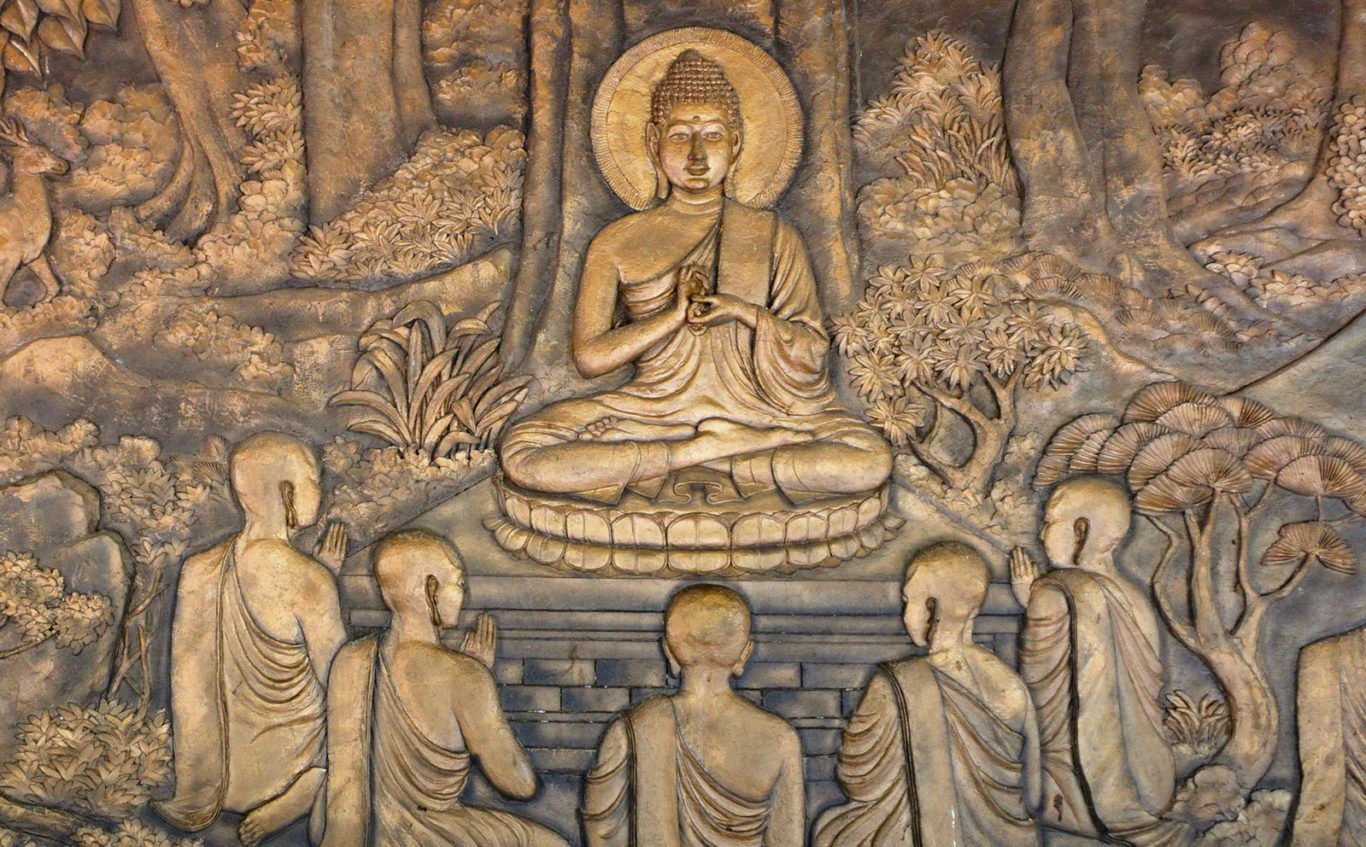
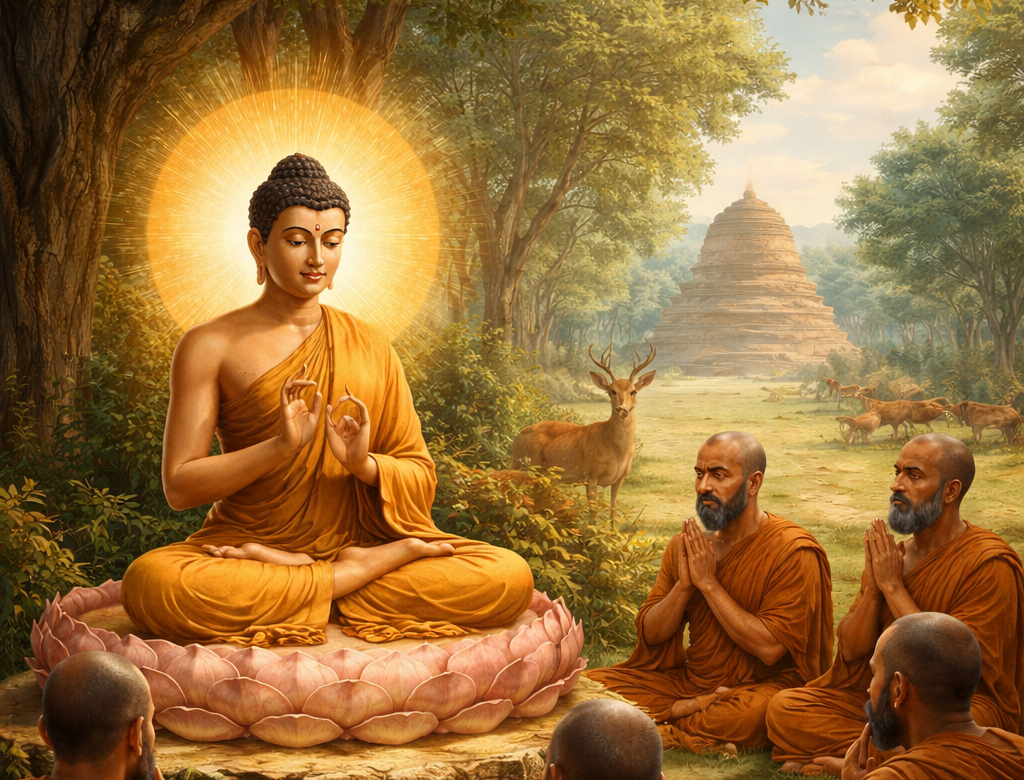
The First Teaching at Deer Park

Soon after his enlightenment, the Buddha travelled to Sarnath, where he delivered his first discourse to five former companions. This teaching, known as the Dhammacakkappavattana Sutta, introduced the Four Noble Truths and the Noble Eightfold Path. With this, the Sangha—the community of monks—was born, marking the beginning of the spread of the Dhamma.

Birth and Early Life (563 BCE)

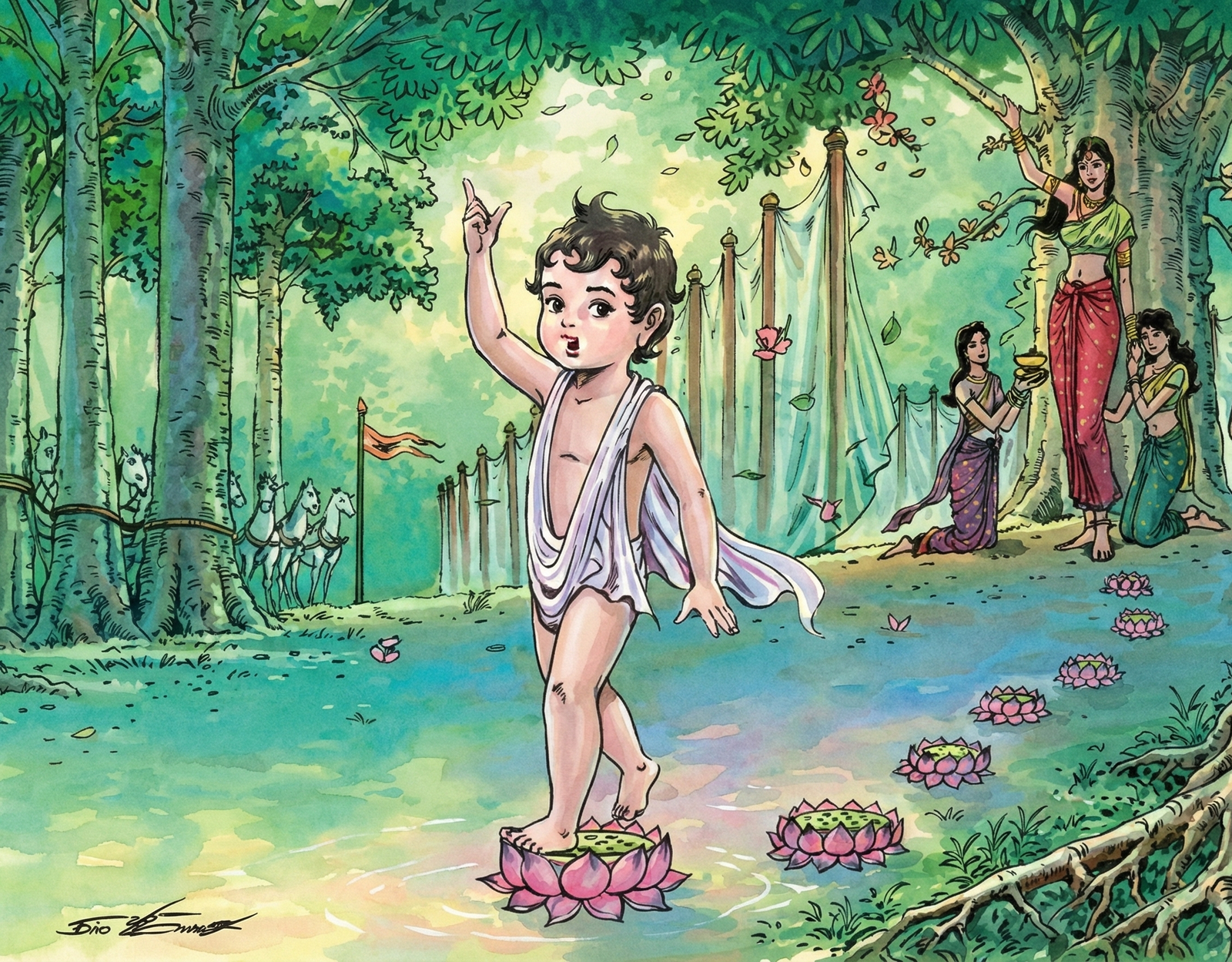
Siddhartha Gautama, who would later become the Buddha, was born around 563 BCE in Lumbini, a region that is now part of Nepal. He was born into the royal Shakya clan to King Suddhodana and Queen Maya. Tradition describes his birth as peaceful and auspicious. After his mother’s passing one week later, Siddhartha was lovingly raised by his aunt, Queen Mahapajapati.

Growing up in the city of Kapilavatthu, Siddhartha enjoyed a privileged and protected life. His father, wishing to shield him from the hardships and uncertainties of the world, ensured he received the finest education, martial training, and a life surrounded by comfort. At the age of sixteen, Siddhartha married Princess Yasodhara, and together they had a son named Rahula.