A peaceful world where all beings live with clarity, freedom, and compassion.
Our Mission
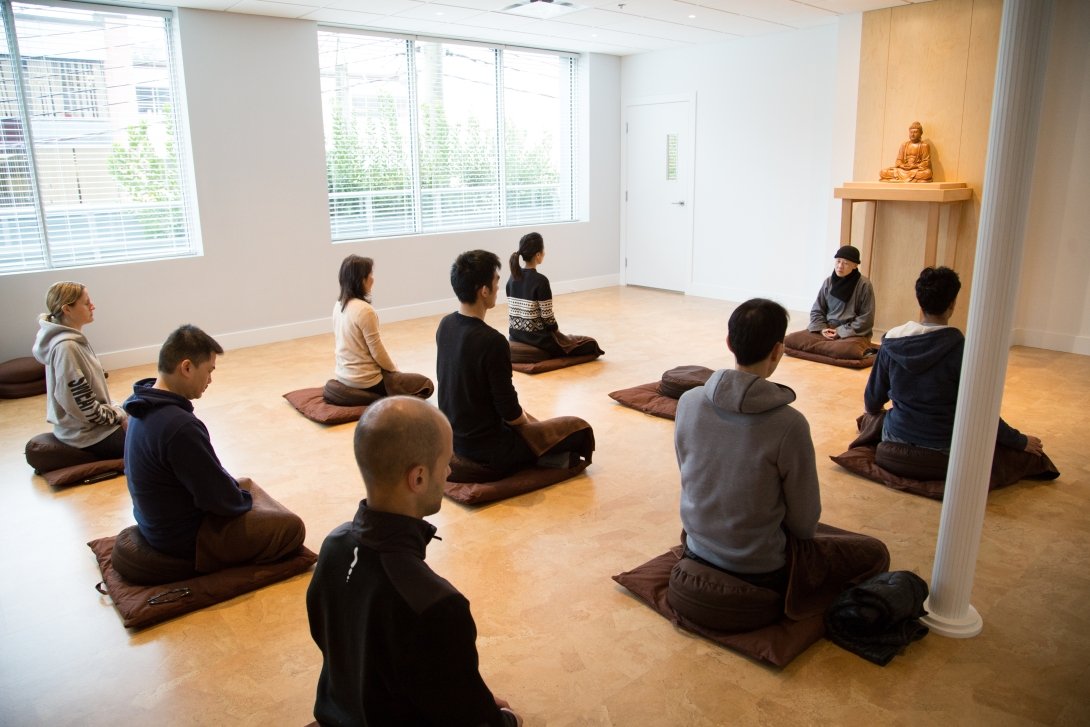
To cultivate spiritual growth through the practice of insight meditation and the authentic Theravāda teachings of the Buddha.
Our Principles
Share the Dhamma Freely
Ensure meditation guidance and the Buddha’s teachings remain accessible to people from all walks of life – regardless of background, culture, or financial means.
Nurture Future Generations
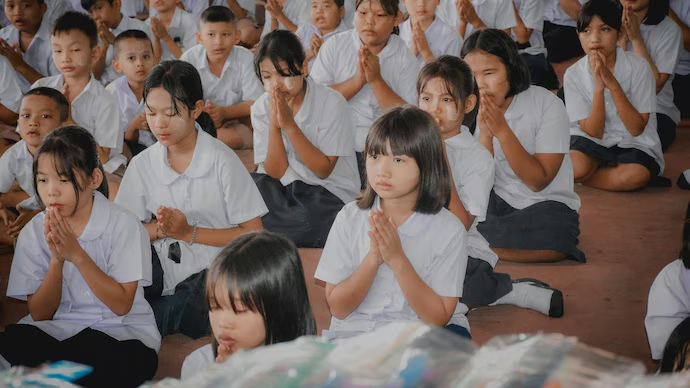
Inspire children and young adults to develop discipline, wisdom, and generosity through practicing Buddhist values.
Provide a Sanctuary
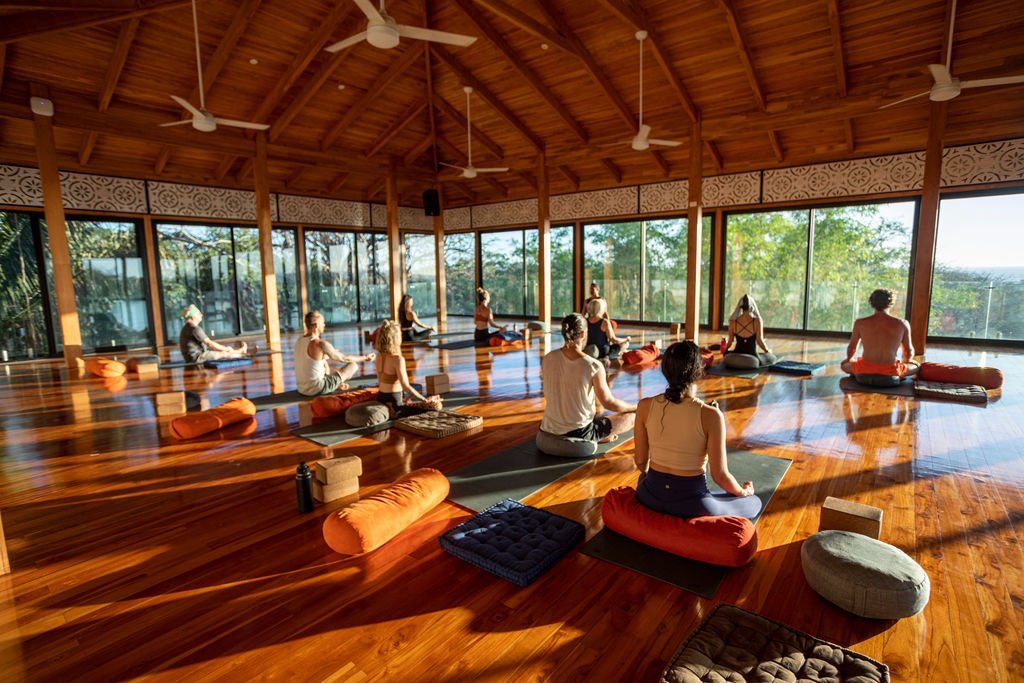
Maintain peaceful spaces, meditation retreats, and communal facilities that encourage ethical living and mindfulness.
Forty-Five Years of Teaching
For the next 45 years, the Buddha travelled widely across northern India, sharing his teachings with anyone eager to learn—monks, nuns, farmers, royalty, merchants, and people from all walks of life. His teachings emphasised wisdom, moral conduct, mindfulness, compassion, and the potential for every being to awaken.
He established monastic communities, guided thousands of followers, and offered practical teachings that continue to resonate today. The Buddha taught in a simple and accessible manner, focusing on understanding the mind, cultivating virtue, and realising inner peace.
The First Teaching at Deer Park
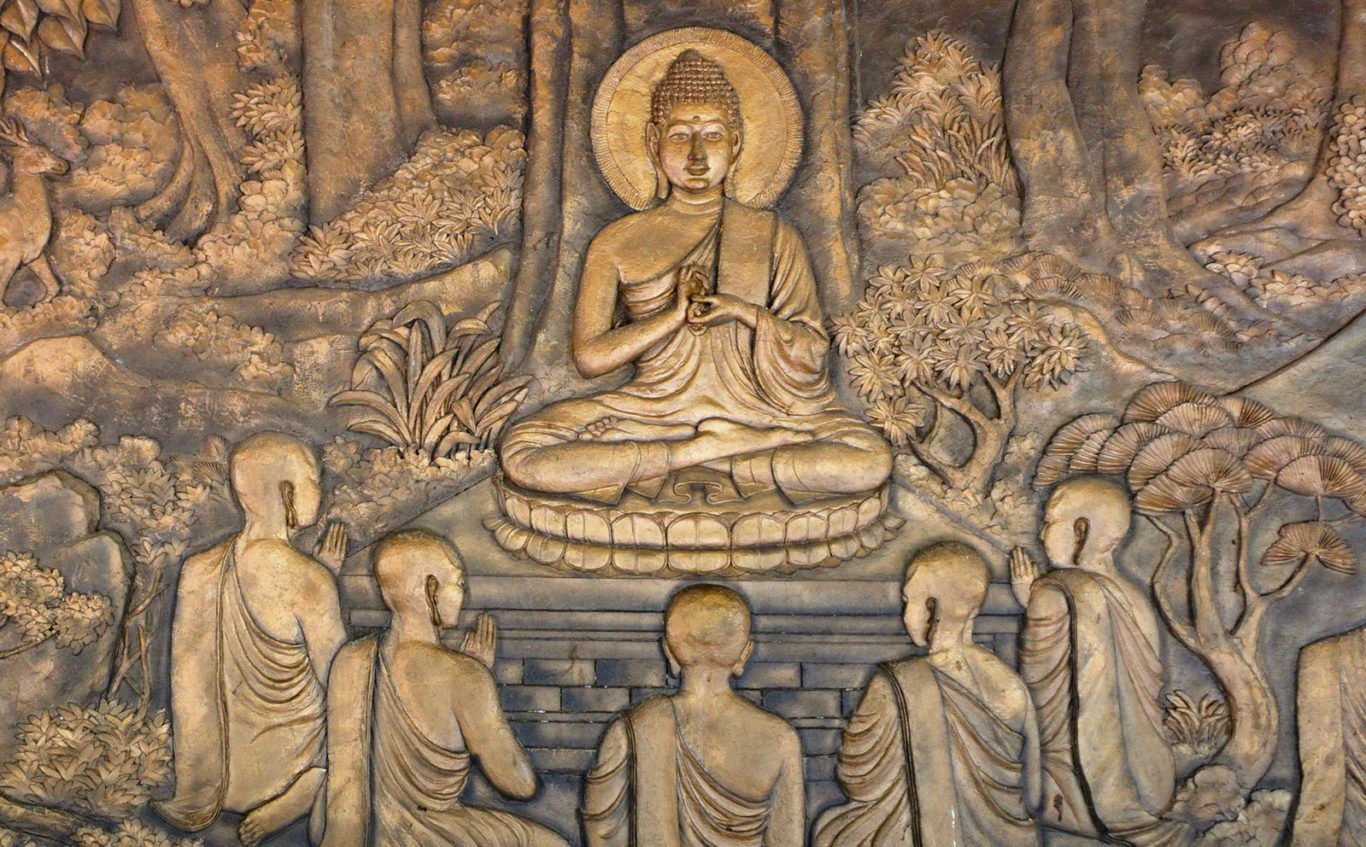
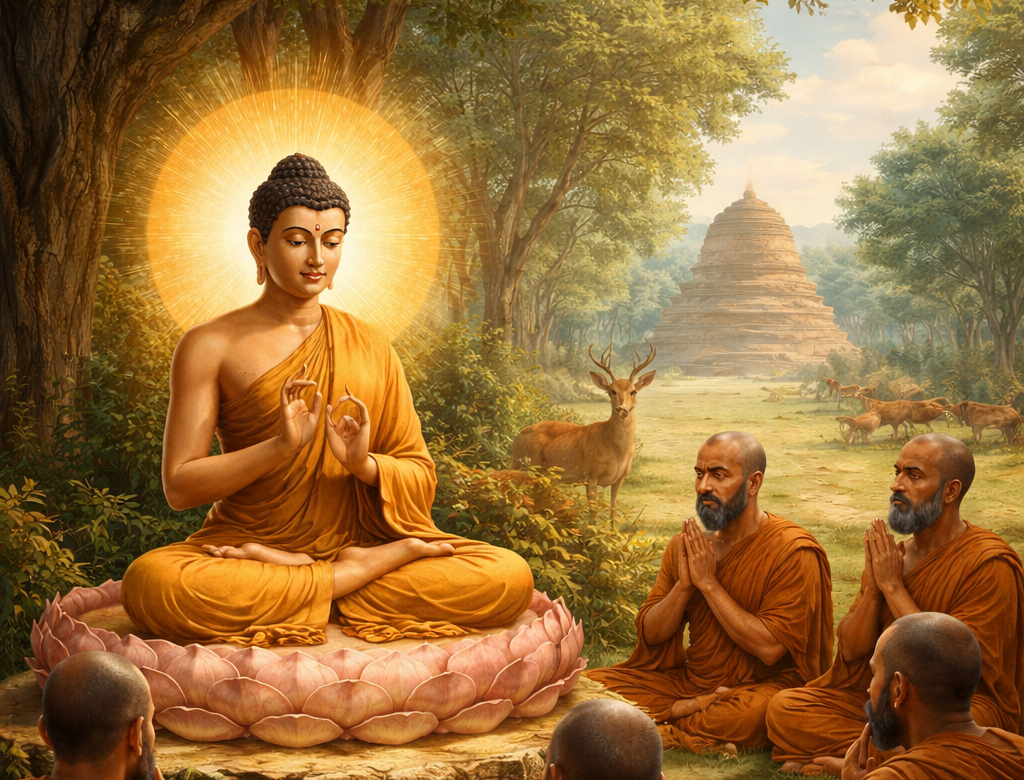
Soon after his enlightenment, the Buddha travelled to Sarnath, where he delivered his first discourse to five former companions. This teaching, known as the Dhammacakkappavattana Sutta, introduced the Four Noble Truths and the Noble Eightfold Path. With this, the Sangha—the community of monks—was born, marking the beginning of the spread of the Dhamma.
Birth and Early Life (563 BCE)
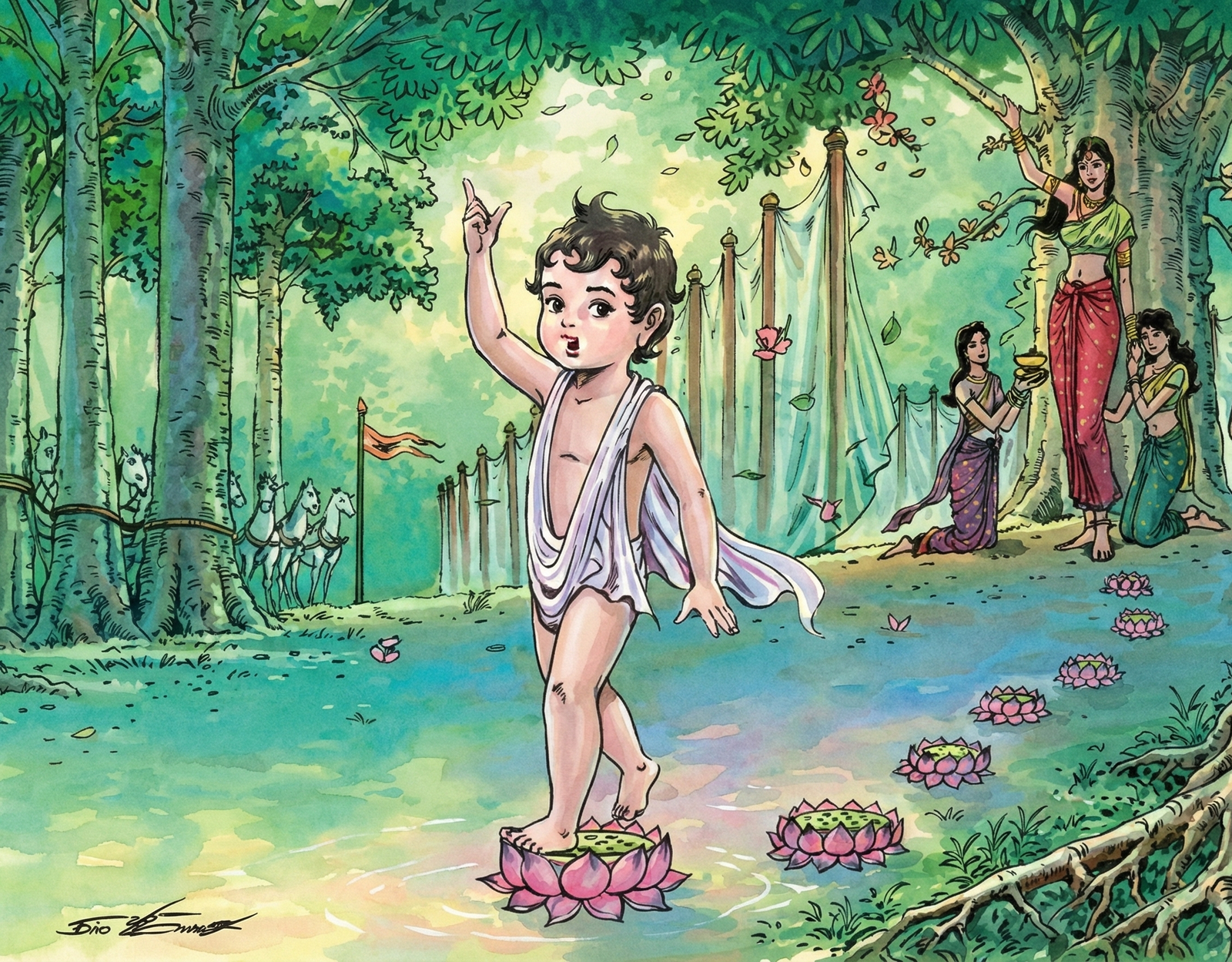
Siddhartha Gautama, who would later become the Buddha, was born around 563 BCE in Lumbini, a region that is now part of Nepal. He was born into the royal Shakya clan to King Suddhodana and Queen Maya. Tradition describes his birth as peaceful and auspicious. After his mother’s passing one week later, Siddhartha was lovingly raised by his aunt, Queen Mahapajapati.
Growing up in the city of Kapilavatthu, Siddhartha enjoyed a privileged and protected life. His father, wishing to shield him from the hardships and uncertainties of the world, ensured he received the finest education, martial training, and a life surrounded by comfort. At the age of sixteen, Siddhartha married Princess Yasodhara, and together they had a son named Rahula.