Meditation & Practices

Vipassana (Insight) Meditation – A Simple Guide

Based on the teachings of Ven. Mahasi Sayadaw

What is Vipassana Meditation?

Vipassana, or Insight Meditation, is the practice of observing your own body and mind to understand their true nature. Everything you experience—physical sensations, thoughts, feelings—is part of a continuous flow of events. By watching them carefully, you see how they arise and pass away, without being controlled by them.

  • Physical experiences (rupa) include movements, sensations, and all bodily activities.
  • Mental experiences (nama) include thoughts, emotions, plans, imaginations, and awareness.

The Practice of Noting

The key tool in Vipassana is mental noting. Simply observe what is happening and label it gently in your mind.

  • When you see something: mentally note “seeing, seeing.”
  • When you hear a sound: “hearing, hearing.”
  • When feeling emotions: “happy, happy,” “bored, bored,” “disheartened, disheartened.”

At first, focus on what is most obvious, then gradually expand your awareness to include more subtle experiences.

Beginning with the Breath

  • Watch your abdomen rise and fall with each breath. Breathe naturally—don’t force or change your breathing.
  • Mentally note: “rising” as it expands, “falling” as it contracts.
  • Keep your awareness fully with the movement; the noting and the breath should happen together.

Handling Mind Wandering

Your mind may drift. When this happens:

  • Note: “wandering, wandering,” “thinking, thinking,” “imagining, imagining.”
  • Once noted, gently return to the breath.

Sensations in the Body

At times you may feel discomfort.

  • Note: “stiffness, stiffness,” “hot, hot,” “pain, pain.”
  • Be patient—don’t change posture immediately. Gradually, your concentration will grow, and sensations will lessen.
  • Only change position if the sensation becomes unbearable, noting every movement carefully.

Moving Mindfully

  • Walk, sit, stand, or lie down slowly and mindfully, noting every movement: “raising, moving, dropping”.
  • Even small actions like arranging your arms, stretching, or turning your head should be noted.
  • Mindful movements help develop concentration and insight.

Daily Activities as Meditation

Meditation is not limited to sitting. Observe and note during daily tasks:

  • Washing your face, bathing, dressing, or tidying up.
  • Eating: note each action—looking at the food, picking it up, chewing, swallowing.
  • Walking: note each step carefully, whether walking fast or slowly.

Mindfulness During Sleep

  • Note your drowsiness: “sleepy, sleepy,” “drooping, drooping.”
  • Meditate until you naturally fall asleep.
  • Sleep may be for only 4–6 hours for highly diligent, advanced practitioners.

Developing Insight

Through continuous noting you will:

  • See that all phenomena are impermanent (anicca).
  • Realise that clinging to them brings suffering (dukkha).
  • Understand that there is no permanent self controlling them (anatta).

This insight leads to Nibbana, the ultimate peace and freedom from suffering, as realised by the Buddha.

Key Principles

  • Be patient, especially with discomfort.
  • Note everything without judging or controlling.
  • Keep your awareness continuous—there should not be long breaks in noting.
  • Progress may be fast or slow, depending on your past practice and effort, but results will come with diligence and faith.

Summary :

Activity What to Note
Sitting quietly Rising and falling of abdomen
Mind wanders Thinking, imagining, planning, etc.
Walking fast Right step, left step
Walking slowly Raising, pushing forward, dropping
Bodily discomfort Stiffness, hot, pain, itchy
Moving/Changing posture Rising, moving, dropping, touching
Daily activities Eating, washing, dressing, tidying
Drowsiness Sleepy, drooping, heavy
By continuously practicing in this way, the mind develops clarity, concentration, and insight. Each act of noting brings you closer to understanding the true nature of reality, leading to lasting peace and liberation.

Forty-Five Years of Teaching

For the next 45 years, the Buddha travelled widely across northern India, sharing his teachings with anyone eager to learn—monks, nuns, farmers, royalty, merchants, and people from all walks of life. His teachings emphasised wisdom, moral conduct, mindfulness, compassion, and the potential for every being to awaken.

He established monastic communities, guided thousands of followers, and offered practical teachings that continue to resonate today. The Buddha taught in a simple and accessible manner, focusing on understanding the mind, cultivating virtue, and realising inner peace.

The First Teaching at Deer Park

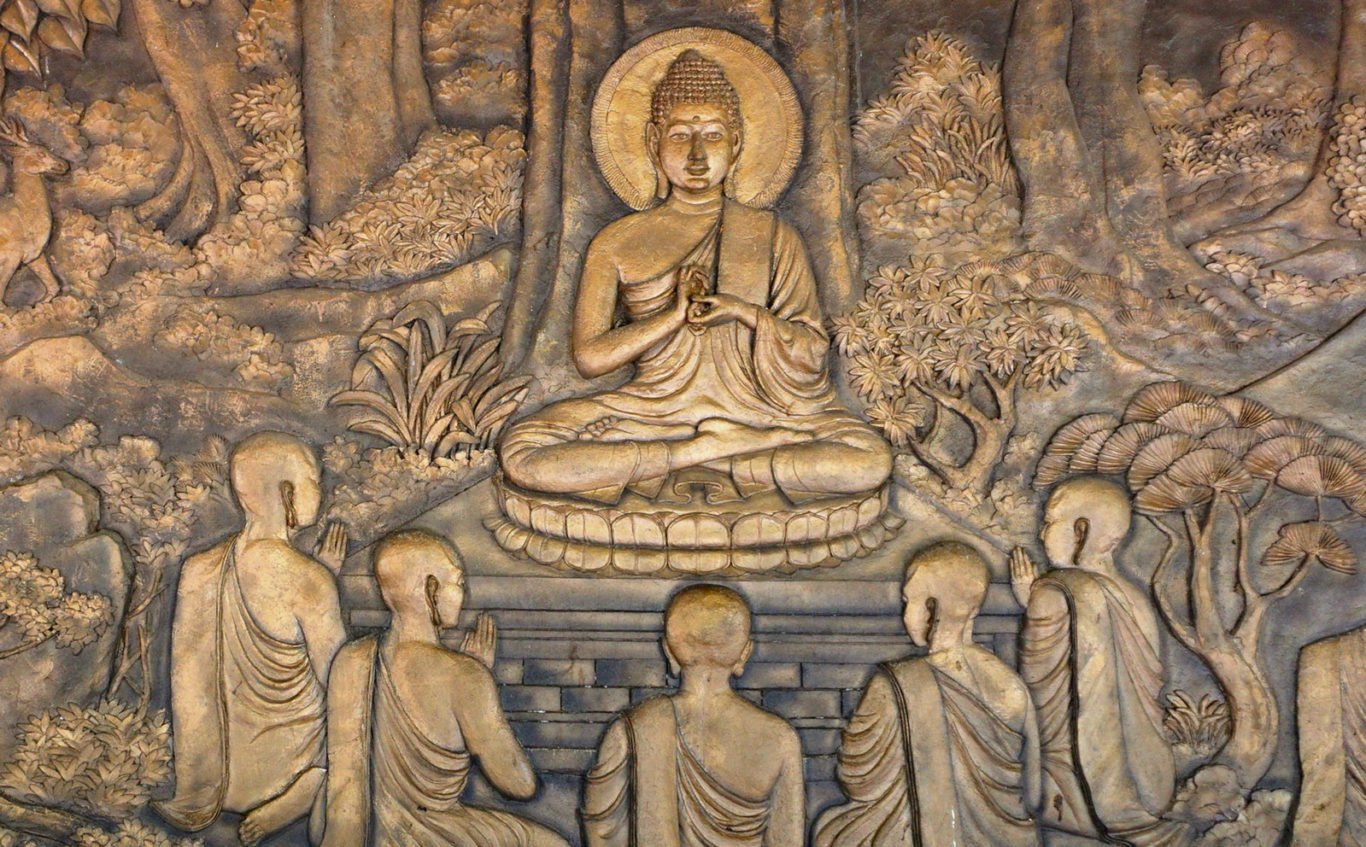
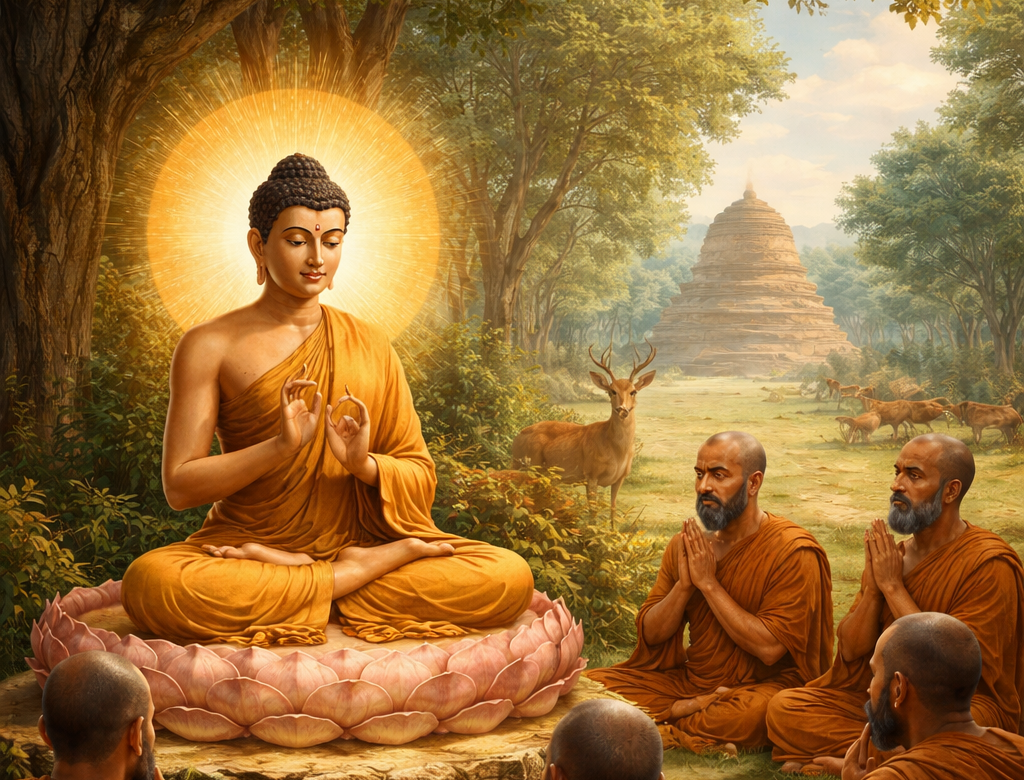
Soon after his enlightenment, the Buddha travelled to Sarnath, where he delivered his first discourse to five former companions. This teaching, known as the Dhammacakkappavattana Sutta, introduced the Four Noble Truths and the Noble Eightfold Path. With this, the Sangha—the community of monks—was born, marking the beginning of the spread of the Dhamma.

Birth and Early Life (563 BCE)

Siddhartha Gautama, who would later become the Buddha, was born around 563 BCE in Lumbini, a region that is now part of Nepal. He was born into the royal Shakya clan to King Suddhodana and Queen Maya. Tradition describes his birth as peaceful and auspicious. After his mother’s passing one week later, Siddhartha was lovingly raised by his aunt, Queen Mahapajapati.

Growing up in the city of Kapilavatthu, Siddhartha enjoyed a privileged and protected life. His father, wishing to shield him from the hardships and uncertainties of the world, ensured he received the finest education, martial training, and a life surrounded by comfort. At the age of sixteen, Siddhartha married Princess Yasodhara, and together they had a son named Rahula.